
Ramayana 2026 Review: A ₹4,000 Crore Quiet Defiance
Yash and Sai Pallavi lead a politically restless Ramayana, but breathless pacing and an underused Rahman-Zimmer score hold back the ₹4,000 crore epic.
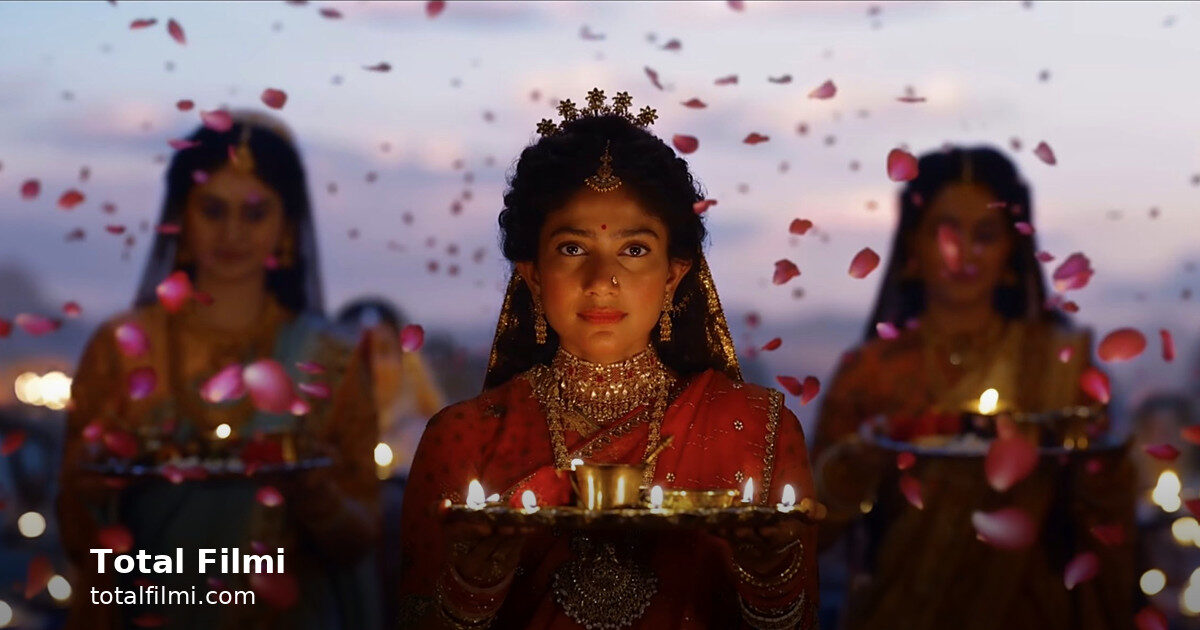
Ramayana: Rise of a Legend may be the most expensive film to arrive with so little interest in chest-thumping. A review published by High On Films describes a Part 1 that is grand in budget but deliberately quiet in ideology: it refuses the usual hero-entry grammar and instead lets Valmiki, regional retellings and a more compassionate gaze carry the frame.
The critic confesses to dreading another shrill soap-opera version of the epic, then watched the film twice. What changes the experience is the film’s political register: it reads less like a single canonical tale and more like an assembly of Ramayanas.
A plural Ramayana, not a standardised one
Where many adaptations flatten the epic into one dominant line, this one places Valmiki at the pivot and pulls together regional retellings from across the subcontinent. That choice produces a Ravana, played by Yash, who is closer to a liberator than a monster, and a Sita, played by Sai Pallavi, who does not just speak progressive ideas but acts on them.
The review argues this is a political move in itself. The Ramayana began as an oral narrative, and as it travelled, tellers added, omitted, exaggerated and reshaped it. By stitching those layers together, the film refuses the fantasy of a single authorised version without violating the spirit of the epic.
Where the film fights itself
At roughly ₹4,000 crore, the canvas is staggering. Yet the review notes that the conventional entry-scene spectacle is largely absent—the camera and staging do not sell the hero and antagonist through familiar swagger. Cinematographers Pankaj Kumar and Mahesh Limaye work with director Nitesh Tiwari to demystify the myths rather than inflate them.
But the film’s worst enemy may be its own pacing:
- What lands: Yash’s Ravana and Tandava, the Jatayu battle, Shobana’s Kaikeshi, and a Hanuman Chalisa that arrives late and hits hard.
- What stumbles: a breathless rhythm, visible cuts where scenes were removed, and music that never gets room to breathe.
- The cost: repeat viewing reduces the experience instead of deepening it.
For composers of A R Rahman and Hans Zimmer’s calibre, that absence is the real regret. Zimmer’s presence is minuscule, and the Rahman-flavoured Hanuman Chalisa feels like compensation—an inkling of the score that might have been.
Why the politics still matter
The film’s most interesting formal choice is its gaze. Where Uri: The Surgical Strike democratised a hawk’s-eye surveillance view, this Ramayana offers Jatayu’s compassionate eyes instead. Lanka is framed through a proletariat-versus-bourgeois lens, Ravana’s rebellion is given a material cause, and the deity-Asura war asks a question the film leaves open: whose side are you on?
It is not a modern classic, the review concludes. But it does not need to be. It renounces the anger-driven reading of the epic that treats its characters as weapons, and that makes it worth seeing—especially in a cultural moment where myths are being hardened into history.
Source: High On Films
Comments आपकी राय