
Why Udta Teer’s Urdu newspaper joke is being called dangerous
A scene in Udta Teer treats reading Urdu as proof of Pakistani identity. The criticism, the literary legacy it ignores and why it matters.
What if a newspaper could decide who you are? That is the question at the heart of a scene in Udta Teer, and it has drawn a sharp response from India Today.
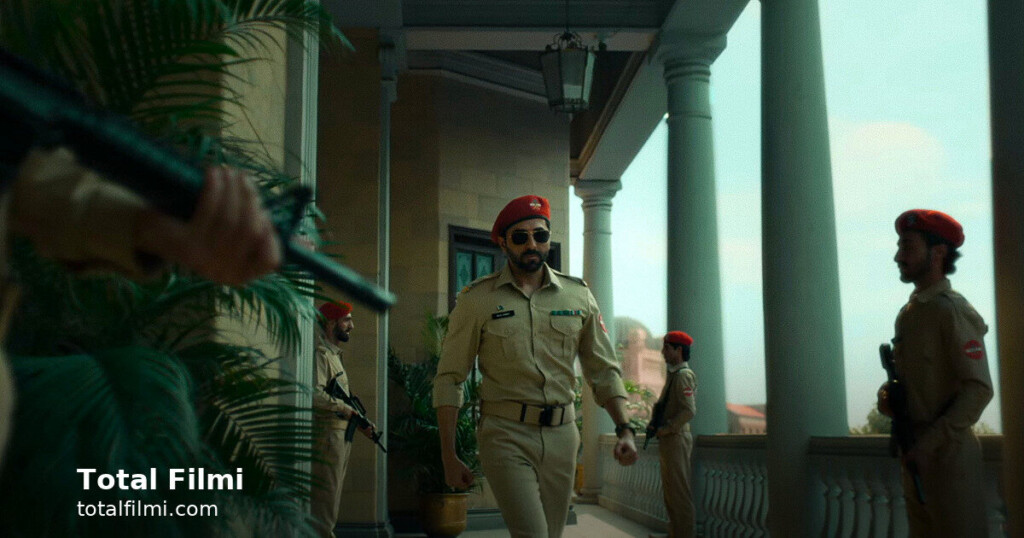
In the Ayushmann Khurrana comedy, a Pakistani spy loses his memory and begins serving India with complete sincerity. When someone tries to remind him of his original identity, the proof offered is an Urdu newspaper. He reads it easily. The punchline: “If you are an Indian Hindu, how can you read Urdu?”
The publication’s standpoint piece is blunt, calling the joke “spectacularly ignorant.” The writer asks since when knowing Urdu became proof of being Pakistani or Muslim—and points out how many Hindu writers built the language’s canon.
A literary tradition that was never one community’s
The essay names a long list of Hindi-belt figures whose place in Urdu is beyond dispute.
- Munshi Premchand began his literary journey in Urdu.
- Firaq Gorakhpuri won the Jnanpith Award for the Urdu poetry collection Gul-e-Naghma.
- Pandit Ratan Nath Sarshar wrote Fasana-e-Azad, still regarded as a classic.
- Rajinder Singh Bedi gave Urdu some of its finest short fiction, including Ek Chadar Maili Si.
- Gopi Chand Narang, among the most distinguished Urdu critics and linguists, also received a Jnanpith.
These were not guests in someone else’s language, the essay argues; they were integral to it. Their faith did not make their Urdu less Urdu, and their Urdu did not make them less Indian. Urdu belongs to the subcontinent, not to any one religion.
Why the joke lands badly
The criticism goes beyond one clumsy line. The film is also taken to task for mixing religious and national identity. After the character loses his memory, he is shown performing aarti in a mandir—as if forgetting a Pakistani self naturally means adopting one particular set of rituals. In another scene, a greeting of Assalamualaikum is quickly corrected to Jai Hind, implying the first cannot belong to an Indian.
The writer’s specific worry is that the Urdu newspaper gag normalises a dangerous idea: that Urdu is owned by one faith, and that some ways of being simply do not fit inside India. For a mass audience that absorbs such films as entertainment, that message can quietly become common sense.
The Ayushmann factor
The essay finds the casting especially disappointing because Ayushmann has built a career on thoughtful, stereotype-bending roles. It also notes his Punjabi roots: older generations in his family would likely have known Urdu well. The piece argues that writer Akash A. Kaushik should spend time with Urdu literature, and that Ayushmann may owe his audience an explanation—if not an apology.
For viewers, the takeaway is simpler. Laugh at the absurd, but notice what the absurd is built on. If a joke needs a shared language to become a “tell,” it is worth asking whose history is being erased to make it work.
Source: India Today
Comments आपकी राय