
Yash’s Ravana turns 10 heads into a war within
Nitesh Tiwari's Ramayana: Rise of Legend reimagines Ravana's ten heads as competing inner selves, and Yash makes the internal war the real spectacle.
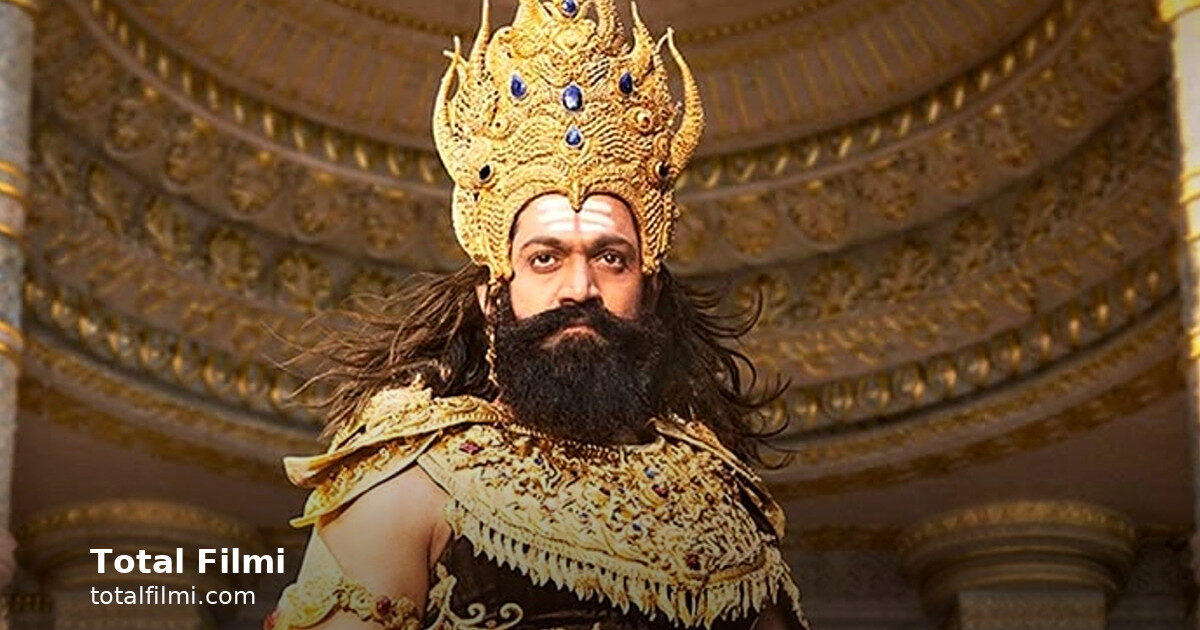
Nitesh Tiwari’s Ramayana: Rise of Legend takes one of Indian cinema’s most familiar images—Ravana’s ten heads—and gives it a psychological spin. In earlier screen versions, those heads often formed a horizontal, awe-inspiring spectacle. Here they become distinct personalities pulling the king of Lanka in conflicting directions, and Yash’s performance makes the idea feel less like visual effects and more like a character study.
From Dashanan to the throne
The film opens with Ravana’s origins, long before he is the ruler of Lanka. He is Dashanan, a young man shaped by poverty, displacement and a search for identity. His mother Kaikesi, played by Shobana, pushes him to witness the suffering of their asura clan and frames it as a wound left by Lord Vishnu. That spark sends him into years of penance.
When Lord Brahma appears, Dashanan asks for immortality. Denied, he accepts a boon that makes him invincible. He returns to Lanka, overthrows its king and becomes Ravana—a learned Shiva devotee and a powerful ruler who begins to believe he cannot be defeated.
The ten heads become a war within
Tiwari’s reimagining turns the ten heads into ten inner voices, each with its own temperament and worldview. Some show versions of the man Ravana might have become; others push him toward rage and destruction. The film lets each voice make its case, so the audience watches a king fighting himself before he ever meets Rama.
- A musician Ravana who reflects his devotion to the veena.
- A sage Ravana who embodies learning and restraint.
- A cursed Ravana carrying the weight of past choices.
- A divorced Ravana, alongside other selves that urge darker action.
In practical terms, it plays like a man holding several conversations with himself, with each voice trying to control the tenth. The spectacle is still there, but the real tension is internal.
The moment the choice turns
The Surpanakha chapter marks the shift. Ravana confronts Vidyutjihva, played by Vivek Oberoi, over his treatment of Surpanakha. What begins as a possible reconciliation ends with Ravana squeezing the life out of him—choosing death when mercy was available. Later, when Lakshman cuts Surpanakha’s nose, Ravana’s rage collides with the competing voices in his head.
That is the tragedy the film sketches: a man who sought power to protect his people ends up consumed by the belief that he is beyond consequence. The boon that made him invincible becomes the thing that feeds his arrogance. Rama may defeat him on the battlefield, but this version suggests Ravana was already losing a war within.
Why this matters for the audience
For Hindi film fans, this interpretation gives the epic a modern psychological register without losing its scale. It reframes Ravana not as a straightforward monster but as a figure whose knowledge, ambition, ego and resentment fight for control. That makes the familiar story worth a fresh look, and it gives Yash a role that rests on conviction as much as on spectacle.
Ramayana: Rise of Legend is running in theatres. India Today rated it four stars in its review.
Source: India Today

Comments आपकी राय