
Aditi Rao Hydari Questions ‘Female-Oriented’ Labels in Cinema
Aditi Rao Hydari asks why the female perspective still needs a label, and makes the case for balanced writing over sensationalism in Parivarik ManuRanjan.
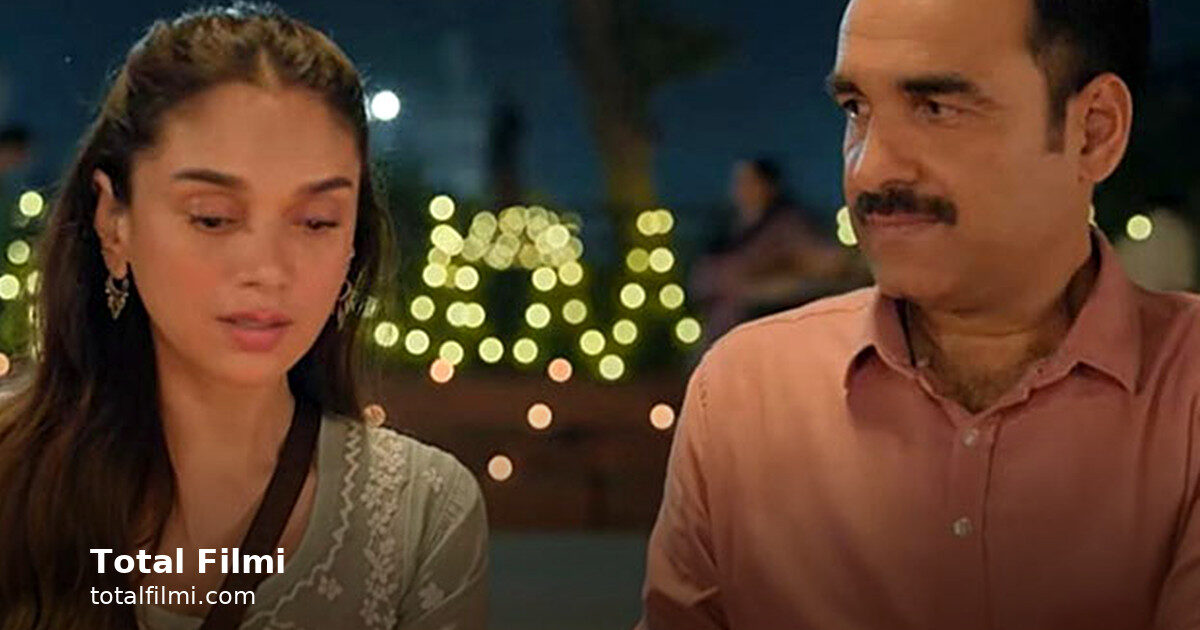
Aditi Rao Hydari has moved from a mute Kathak dancer to a queen in Padmaavat to Bibbojaan in Heeramandi. With Parivarik ManuRanjan, she steps into a rooted, contemporary household as Helen, a full-time house help whose presence quietly shifts the equations of a family. But the conversation around her latest film has turned to a question she is evidently tired of: why do we still box films by a “female-oriented” label?
A label that starts from absence
Hydari is not saying women’s stories do not matter. Her frustration is that they still have to be insisted upon. “Sometimes I wonder, why does one have to keep insisting on the ‘female perspective,’” she said. The need, she explains, comes from a history of suppression. “The fact that the female perspective has been so suppressed is why you have to keep pushing for it,” she said.
Both perspectives, she argues, should simply be part of filmmaking because both genders make up the world. The label, in her telling, is a correction for an absence, not the ideal destination.
Inside Parivarik ManuRanjan
In the film, Hydari shares screen space with Pankaj Tripathi for the first time. Tripathi plays Ranjan Dubey, while Hydari plays Helen, the house help whose presence draws attention from people around the household and opens questions about relationships and domestic dynamics.
Hydari said the project’s rooted, simple atmosphere was rare for her, and that the chance to work with Tripathi made her grab the role. “I never thought I’d get an opportunity to work with Pankaj sir,” she said.
The write-test, not the label
For Hydari, the quality of a female character comes down to the writing, not the category. She asks a direct question of any film: “Do you have a story or do you have sensationalism?” The answer, she suggests, shows whether a character has been given a real place in the narrative.
She pressed the point with romantic films. A love story between a man and a woman cannot treat the woman as an object or a replaceable commodity, she said, adding simply: “There need to be more balanced stories in the world.”
Her working rules
Asked about her approach on set, Hydari kept the focus on curiosity and surrender:
- Stay a curious kid on set and stay engaged with what is happening.
- Leave ego outside, or at least try not to carry one.
- Surrender to the director’s vision instead of thinking about yourself.
- Be present in the scene, not distracted by performance anxiety.
Why the audience should care
The “female-led film” has become a useful marketing handle, but Hydari is asking audiences and makers to look beyond it. If a story is truly balanced, the label should not be doing the heavy lifting. Her comments point to a larger expectation: less sensationalism, more thoughtful writing, and women whose presence drives the film because the story demands it.
For fans of Parivarik ManuRanjan, the test is on screen — whether Helen feels like an equal participant in the family’s story, not a box-ticking addition.
Source: Bollywood Hungama



Comments आपकी राय