
The 10,000-Year Penance That Made Ravana
Yash plays the ten-headed king in Ramayana: Rise of a Legend, but the film leaves out the Kailasa roar and nine-head sacrifice behind the name.
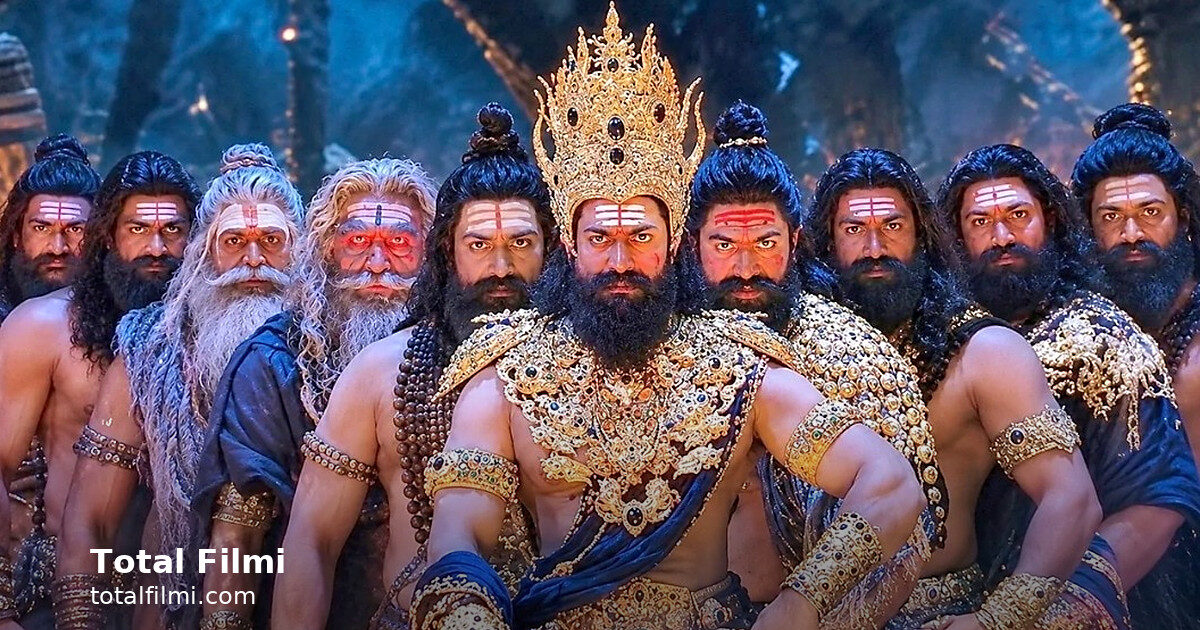
Yash towers over Ramayana: Rise of a Legend as Dashanan, the ten-headed king of Lanka, with much of the screen time devoted to the coming clash with Lord Rama. What the film compresses is the stranger, older origin of how the character actually became Ravana. As the epic’s Uttara Kanda tells it, that backstory explains the one loophole in his invincibility.
How a roar at Mount Kailasa gave him the name
After defeating his half-brother Kubera and taking the Pushpaka Vimana, Ravana — then known as Dashagriva — tried to pass Mount Kailasa. When Nandishvara stopped him, he mocked Shiva’s attendant and then decided to lift the mountain out of his way. Shiva responded by pressing the mountain down with his toe, pinning Ravana’s arms beneath the weight.
The trapped king let out a roar that shook the three worlds. That cry is where the name sticks: Ravana is the one who roars, a name tied to a cry that spread through the worlds. Shiva freed him only after Ravana’s praise, and the name was bestowed as a mark of both raw strength and fierce devotion.
The 10,000-year penance, head by head
The Valmiki Ramayana says Dashagriva was born with ten necks and twenty arms, and his father named him Dashagriva. Far from a magical glitch, those ten heads became offerings. At Gokarna, he undertook a 10,000-year penance without food.
- Every thousand years, he severed one head and offered it into the sacred fire.
- After 9,000 years and nine heads, he prepared to offer the tenth.
- Brahma appeared, stopped the final cut, restored his head and granted a boon.
Ravana asked for protection from gods, demons, celestial spirits and beasts — but deliberately left out humans, dismissing them as too weak to matter. That single blind spot was the opening Lord Rama was born to exploit.
Why it matters for the film
The film’s version shows Ravana’s penance but not the nine severed heads, and the Kailasa chapter that gives him the name is left off-screen. The result is a Ravana who can look like a straightforward villain. For fans watching Yash, the missing backstory changes the reading: this is a scholar and devotee capable of extreme self-sacrifice, undone by the very arrogance that made him skip mortals.
There is also a franchise logic at work. With the second part scheduled for Diwali 2028 and Sunny Deol joining as Lord Hanuman, the backstory can still be mined for the next film. But the first part’s compression means Rama’s eventual victory carries less of the philosophical charge the epic intends.
Source: India Today

Comments आपकी राय