
Sara Ali Khan’s Kedarnath Visit Draws Fatwa from UP Cleric
Sara Ali Khan's October 25 Kedarnath visit has drawn a fatwa from a UP cleric, while the temple committee says her team filed the required affidavit.
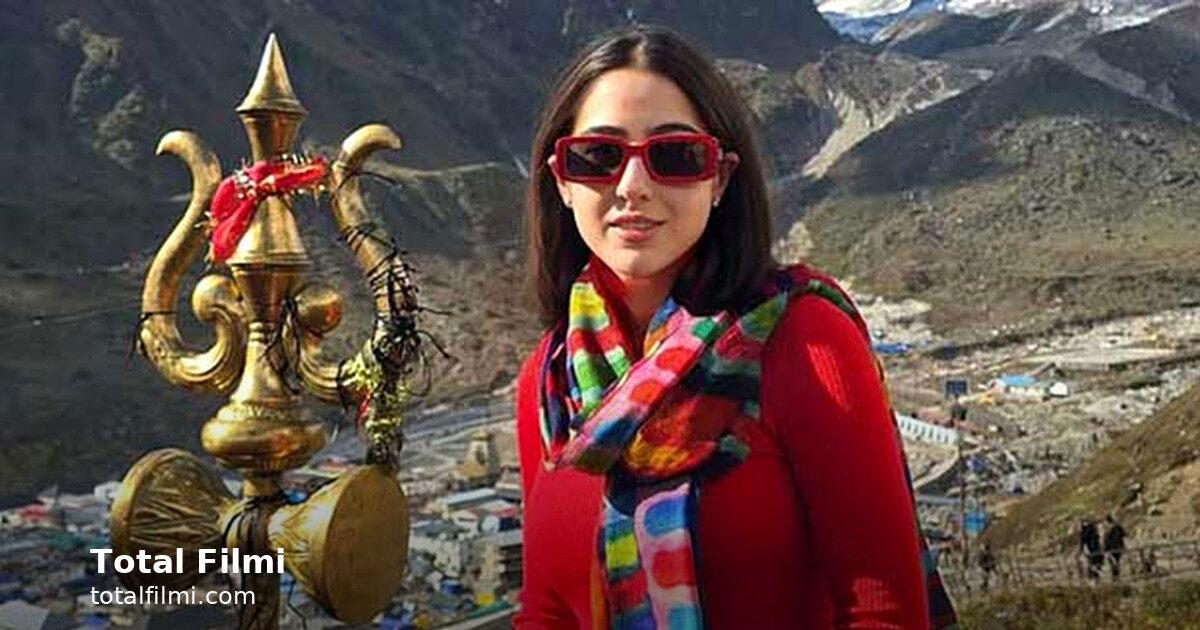
Sara Ali Khan’s October 25 visit to Kedarnath has turned into a religious controversy after a cleric from Uttar Pradesh reportedly issued a fatwa over the actor offering prayers at the shrine.
Maulana Mufti Shahabuddin Razvi Barelvi was quoted as saying that Islamic Sharia does not permit Muslims to take part in the religious practices of another faith. He described such acts as “impermissible and haram” and said Sara should repent before Allah, according to media reports.
Reports say Sara travelled to Kedarnath by helicopter, waited in the darshan queue, took part in puja and aarti, and also visited the Bhukunt Bhairav Temple. In the cold weather, women devotees reportedly offered her a shawl to keep warm.
What the temple committee says
The Badrinath-Kedarnath Temple Committee’s protocol requires non-Hindu visitors to submit an affidavit before offering prayers at the shrine. BKTC CEO Sohan Singh Rangar reportedly confirmed to News18 that Sara’s team had submitted the required affidavit before her visit.
That detail matters because it frames the visit as following the shrine’s entry protocol, even as the cleric’s objection comes from his reading of Sharia.
A long Kedarnath connection
Sara’s link to Kedarnath is not new. She made her Bollywood debut in the 2018 film Kedarnath, opposite the late Sushant Singh Rajput, and has returned to the temple several times since.
For fans, this is a personal and professional history wrapped into one place, which makes the controversy feel especially close to her story.
What a fatwa does and doesn’t do
A fatwa is an Islamic legal opinion or ruling issued by a scholar on a question of Islamic law. It is not a court order, and it is not binding on everyone. Here, the reported ruling reflects one cleric’s stated position and should not be read as a universal view shared by all Muslims or Islamic scholars.
The useful takeaway for readers is to treat this as one voice in a diverse community, not a verdict with legal force.
- The visit took place on October 25 at Kedarnath.
- The cleric called participation in another faith’s worship “shirk” and “haram.”
- The temple committee says Sara’s team filed the required non-Hindu affidavit.
Why this matters for Bollywood fans
This is not just a story about one actor. It lands in the middle of a long-running conversation about religious identity, public behaviour and the boundaries that stars are expected to navigate. When a leading actor visits a shrine tied to her own debut film, the personal and the political become impossible to separate.
For our audience, the story is a reminder that celebrity worship and literal worship intersect in ways that can flare up quickly. The key is to read the details: what was said, what was actually done, and what a fatwa can and cannot do.
There is no indication in the reports of legal action against Sara. The story is a controversy of interpretation, not a legal case.
Source: bollywoodHungama.com


Comments आपकी राय