
Ramayana’s Ravana Problem: Is the Villain Overshadowing Rama?
Nitesh Tiwari's Ramayana is drawing praise for spectacle, but the debate is about balance: has Yash's Ravana been given a richer arc than Ranbir Kapoor's Rama?
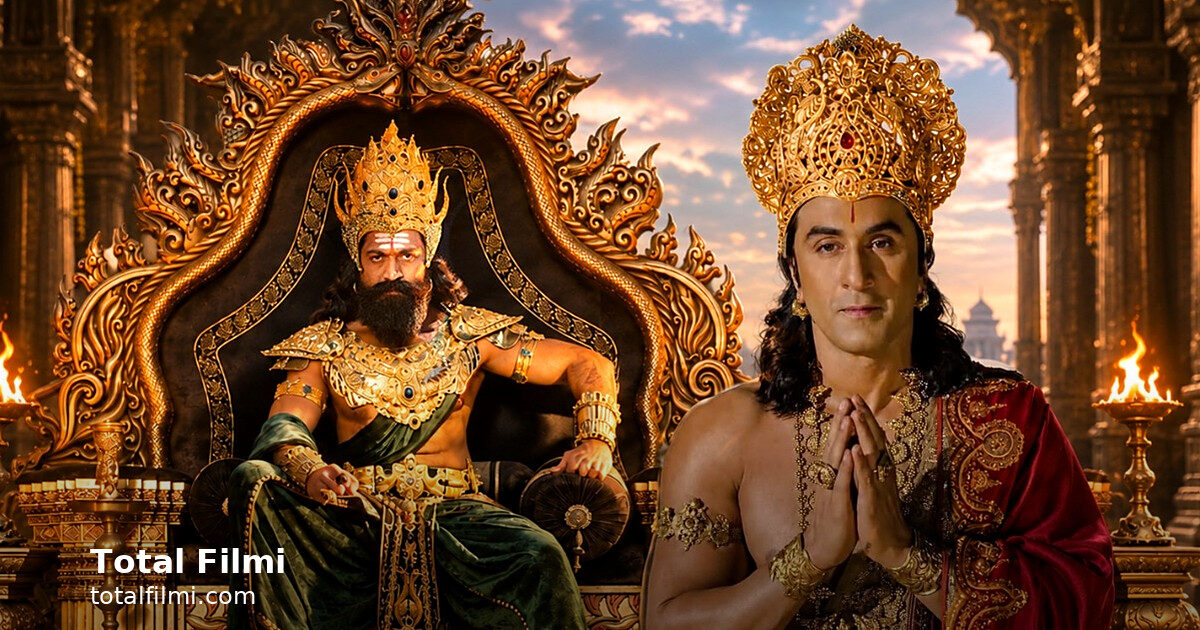
Nitesh Tiwari’s Ramayana has arrived with emotion, performances and spectacle, but the most heated post-release conversation is not about the visual scale. It is about a perceived imbalance: Yash’s Ravana is written with so much care that some viewers feel Ranbir Kapoor’s Rama is reduced to what social media calls a “guest role in his own epic.” That is probably too sharp, but the film does give the antagonist a strikingly generous canvas.
The prestige treatment for the antagonist
Where the film is boldest is in Ravana’s introduction. This is not a quick villain reveal; it is a full origin story. His clan is persecuted by the devas, pushed into servitude under Kubera, and eventually pushed into rebellion. He performs penance, earns boons and takes Lanka. By the time he becomes king, the audience has been shown exactly how he got there.
Yet this is not a whitewash. The film repeatedly lets his ego surface, most damningly when he kills Vidyutjihva, the husband of his sister Surpanakha, over a personal slight. A ruler who murders family over bruised pride is not a misunderstood revolutionary; he is a tyrant with a grievance. The ten heads, imagined as competing voices and personalities, also give Yash room to play ruler, warrior, devotee and flawed man.
Revenge moves into the foreground
The film’s most consequential choice is about why Ravana abducts Sita. It builds Surpanakha with real sympathy and makes her humiliation the main trigger. That is a valid creative decision. But it changes the weight of the motivation. In Valmiki’s Aranya Kanda, Sarga 34, Surpanakha tells Ravana about Sita’s beauty and encourages him to make her his wife. In Sarga 46, when Ravana approaches Sita disguised as an ascetic, he is described as overcome by desire. Lust and entitlement are central to the original episode.
The film does not erase that completely: one of the ten-headed voices acknowledges the lust. But the acknowledgement is passing, while revenge gets the dramatic engine. Audiences may walk away remembering a powerful brother retaliating for his sister, rather than a man undone by desire and arrogance.
Where the imbalance shows up
- Ravana receives a detailed backstory, relationships and a rise to power.
- Rama’s marriage, exile and forest journey are covered mostly as a montage.
- The film spends more emotional time on Vidyutjihva than on Dasharatha’s promise to Kaikeyi.
- The decisive Rama-Ravana confrontation is still saved for Part Two.
Rama’s strength is different, not weaker
None of this makes Rama weak. His heroism rests on dharma, not on spectacle. The epic itself gives a structural reason for his human birth. In the Bala Kanda, Sarga 15, Ravana secures a boon protecting him against devas, gandharvas and yakshas, but does not bother about humans because he considers them insignificant. Vishnu therefore takes human birth to defeat him. Rama’s restraint is part of the design.
The criticism has merit not because the film fails Rama, but because his emotional beats often do not get the same room to land. The relationships around him generate lovely moments, particularly Lakshmana’s choice to follow him into exile. Yet the compression makes the imbalance easier to feel.
Given that this is only the first instalment, the fairest read is to treat it as a setup. Part Two still has to deliver the actual confrontation and the emotional payoff. Until then, the argument is less about glorifying Ravana than about whether both sides have been given enough room to make the final clash mean something.
Source: India Today



Comments आपकी राय