
Heer Sara Review: A Road-Trip Journey Stalled by Low Stakes and Predictable Detours
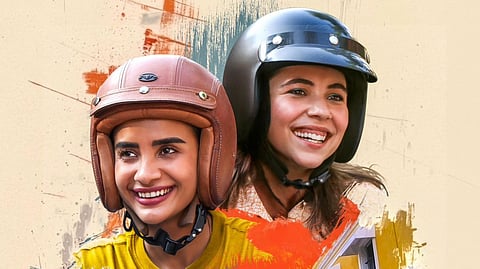
Movie Ratings: 2.5/5 Stars
What Works:
Heer Sara is at its best when it leans into the quiet intimacy of its central motorcycle odyssey. The film’s ambition to explore female bonding against the backdrop of an Indore-to-Pondicherry road trip is commendable, offering a visual respite that feels both refreshing and liberated. Its handling of LGBaTQ+ themes and the nuances of queer acceptance is notably sensitive; rather than opting for loud, sensationalist drama, the film treats these elements with a restraint that feels progressive for a story rooted in traditional Indian family dynamics.
What Doesn’t Work:
The narrative’s greatest struggle is its lack of high stakes. For a screenplay to sustain itself through to the final conflict, it needs a driving force that feels urgent, yet Heer Sara feels remarkably low-tension. The middle stretches are weighed down by repetitive family drama and clichéd North Indian tropes that feel like “check-box” writing rather than organic storytelling. Because the stakes never quite peak, the film ends up feeling like a well-meaning conversation that eventually overstays its welcome, lacking the narrative “engine” required to reach a truly satisfying destination.
Technical Analysis:
Directed by Kartik Chaudhry and co-written with Manuj Sharma, the film shows promise in capturing texture but falters in its rhythm.
The editing is particularly problematic; several shots are cut in a manner that drains the emotional value from key scenes, undercutting the impact of the
actors’ work. While the cinematography effectively captures the beauty of the journey, the script relies too heavily on “relatable” banter and predictable
reveals, which prevents the film from ever truly revving up into something memorable.
Star Performances:
Maanvi Gagroo anchors the film as Heer, delivering an emotionally guarded and grounded performance that provides much-needed stability. In contrast, Patralekhaa Paul as Sara seems to struggle; while she is clearly putting in the effort, the characterization feels inconsistent and doesn’t quite work in her favor. The chemistry between the two leads is sincere, yet it often feels overshadowed by the screenplay’s tendency to prioritize
social messaging over natural, flowing dialogue.
Other Supporting Cast:
Arif Zakaria’s portrayal of the father, Dharamvir, is curiously at odds with the rest of the film. While he brings a deeply layered and sophisticated intensity to the role, this gravity feels mismatched with the movie’s lighter, slice-of-life tone. Shweta Salve as the mother and Nishank Verma as the boyfriend provide competent but standard support, often feeling more like symbols of conventional pressure than fully fleshed-out human beings.
Conclusion:
Ultimately, Heer Sara is a film with its heart in the right place, but its feet are stuck in familiar mud. It celebrates sisterhood and rebellion with noble intent, yet its refusal to raise the stakes or break away from predictable parenting tropes keeps it from leaving a lasting mark. It is a pleasant, message-driven ride that offers moments of warmth, but it lacks the narrative grit and crisp execution needed to be a definitive entry in the Indian
road-trip genre.
Trailer Link: https://youtu.be/yadvpD__ZyM?si=71CAKAMGfAutoggY

Comments आपकी राय